Fluance
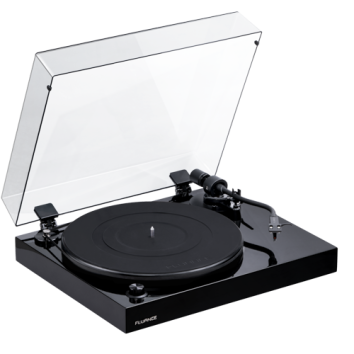
Fluance RT82 Review
A step up from entry-level with better speed accuracy and build quality.
Also worth considering
- Fluance RT81Check on AmazonMid-Range
- Audio-Technica AT-LP120XUSBCheck on AmazonMid-Range
Quick Specs
Hover over ⓘ to learn what each means
- Drive Type ⓘ Belt drive = quieter listening, great for home use. Direct drive = instant start/stop, good if you want to DJ or scratch records.
- belt
- Speeds ⓘ This tells you which records you can play. 33 RPM plays full albums, 45 RPM plays singles. If it includes 78, you can also play old vintage records from your grandparents' collection.
- 33, 45 RPM
- Built-in Preamp ⓘ Yes = plug directly into any speakers and you're ready to go. No = you'll need to buy a separate phono preamp or use a receiver with a 'phono' input.
- No
- USB Output ⓘ Yes = you can plug into your computer and save your vinyl as digital files to listen on your phone. No = vinyl only, no digital copies.
- No
- Cartridge ⓘ This is the part that actually touches your records. A good cartridge means better sound quality. You can always upgrade this later without buying a new turntable.
- Ortofon OM10
Our Take
Fluance's RT82 occupies a useful spot in the lineup: it's meaningfully better than entry-level decks in the ways that matter most — speed accuracy, build quality, and cartridge — without crossing into the upper tier where you're also paying for a phono stage and potentially new speakers to hear the difference.
The optical speed sensor is a genuine feature. It monitors and corrects platter speed in real time, which translates to better pitch stability and tighter bass than belt-drive decks without this system. The Ortofon OM10 cartridge is a capable performer and a step up from the AT91 found on cheaper Fluance models.
The missing built-in preamp is the main additional cost consideration — you'll need a phono stage or a receiver with a phono input. That said, the RT82 rewards a quality preamp investment in a way that cheaper decks don't. It's a solid mid-range foundation.
Sound Quality
The optical speed sensor pays audible dividends in bass performance — notes are more defined and rhythmically stable than they'd be without speed correction. The Ortofon OM10 brings genuine midrange clarity; vocals and instruments have more presence than entry-level carts deliver. Compared to a budget beginner deck, the upgrade is clearly audible. Compared to the RT85 with the 2M Blue, there's a gap in high-frequency extension and detail — but the RT82 costs noticeably less. Good match for: rock, pop, electronic, anything where timing and clarity are valued.
Setup and Ease of Use
Requires a phono preamp or phono-equipped receiver — nothing comes out of the speakers without one. Counterweight and anti-skate setup take about 10 minutes following the included manual. Speed change between 33 and 45 RPM requires manually repositioning the belt on the motor pulley. The optical speed sensor handles the rest automatically once the platter is up to speed. Stable, level placement is important — the speed sensor is sensitive to vibration.
What We Like
- ✓ Speed sensor for accurate playback
- ✓ Solid build quality
- ✓ Great value for a mid-range deck
What Could Be Better
- ✗ No built-in preamp
- ✗ Manual belt change for speed
Best For
Upgraders who want accuracy without breaking the bank
Sold Out on Amazon?
If this turntable isn't available, these similar options are worth considering:
- Check availability
Denon DP-300F
Fully automatic with built-in preamp from hi-fi brand.
- Check availability
Pro-Ject T1
European audiophile design at similar price.
Compare and explore more options:
- → Best Turntables for Beginners — picks across every beginner budget
- → Best Turntables Under $300 — top picks for budget-conscious buyers